How to identify
How to identify a Vu Cao Dam
Vu Cao Dam worked in bronze, clay, silk, tempera and oil over seventy years, so what to look for depends on the medium. Signature, surface, subject and history all have to agree.
The signature
On his oils he usually signed “vu cao dam” in a flowing lowercase script, low in a corner, often with a two-digit year. The back of the same canvas is often signed again in Chinese, then titled and dated in full.
Silk paintings can be signed in Chinese and in roman letters, with a seal. Works from his Vence years can carry the place name with the date.
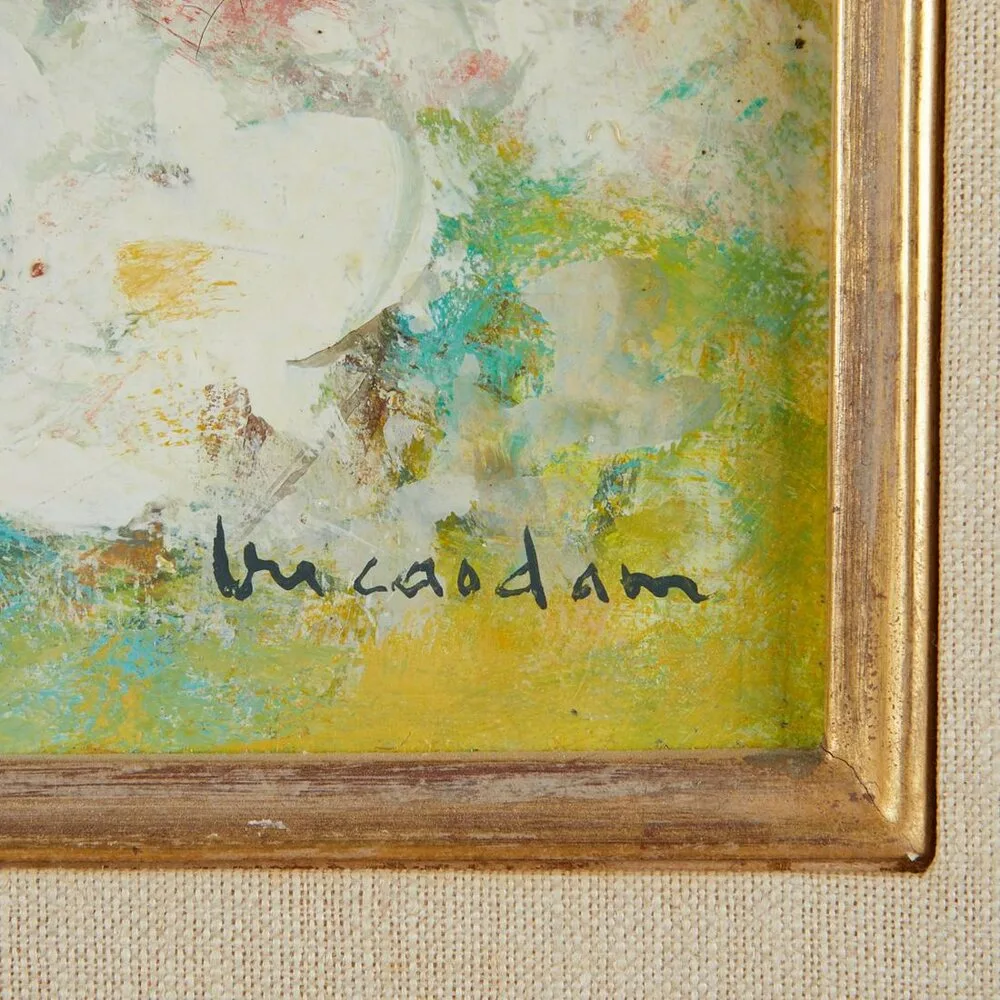
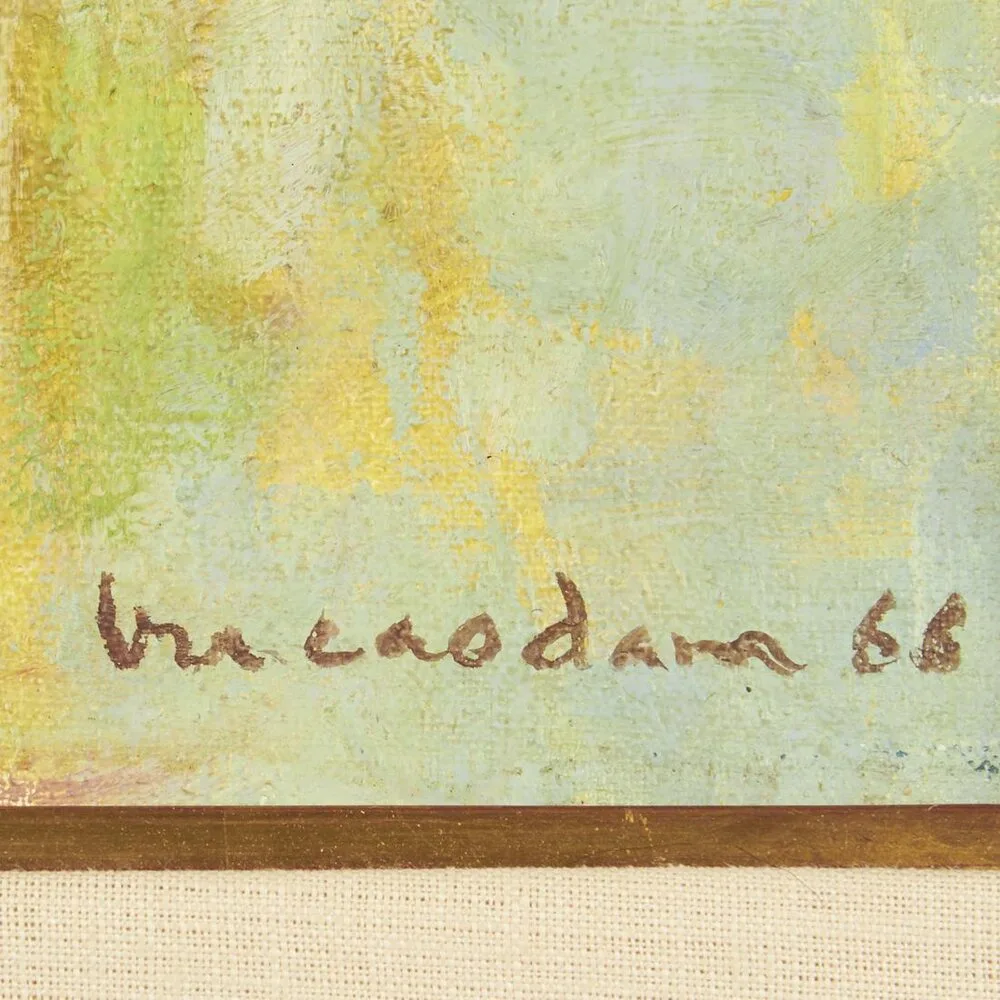
Seals
A large red seal on a silk of about 1935 reads 放大光明, “magnify the light,” rather than his name. A seal on one of his works is not necessarily a name seal.
Materials by period
1926 to the 1930s. Sculpture first: academic bronzes, busts and heads, some with Khmer and Chinese references.
From about 1935. Ink and gouache on silk laid on rigid card, drawn in graphite and washed with water to blend the colors. He sometimes painted both sides of the silk. Large silks exist: Five Ladies from Hué of 1939 is 84 by 113 centimeters.
The war years. With metal requisitioned he made hand-modelled terracottas, which are unique pieces.
From about 1953. Egg white, Caparol and rigid supports such as Isorel hardboard.
The 1950s on. Oil, and from the 1960s almost entirely oil on canvas. On the oils Revere has handled, the backgrounds are thick and scraped while faces and hands are smoother and carefully drawn.
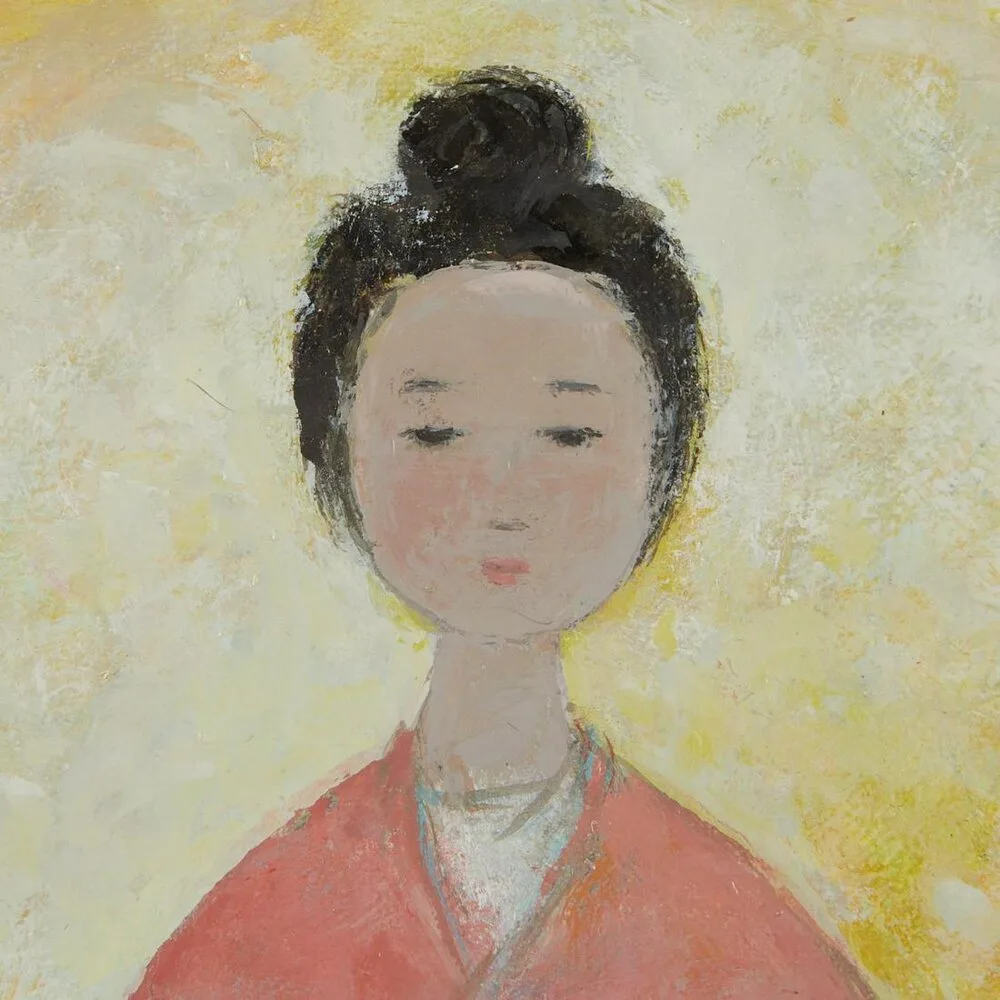

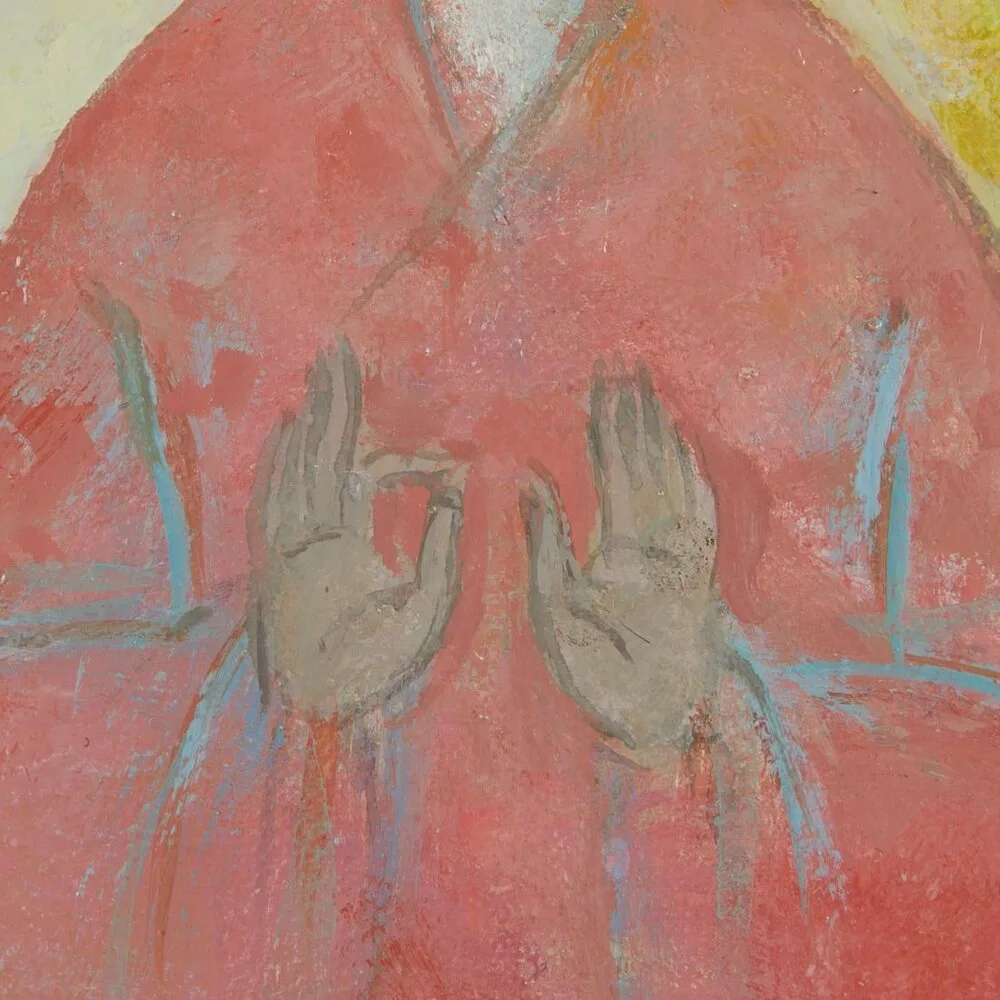
Sculpture
Early bronzes are signed in capitals with the date. His bronze of Colette Reynaud carries the E. Godard foundry stamp and artist's proof numbering. A bust of 1938 has a seal-style signature under the shoulder. Sculpture by him rarely comes to market.
Lithographs
His color lithographs date from 1969 to 1971. They are signed in the plate or by hand with the year. Artist's proofs read E.A., some with roman numbers out of XXV. Editions of 150 are reported, and the sheets run about 76 by 56 centimeters.
The back and the frame
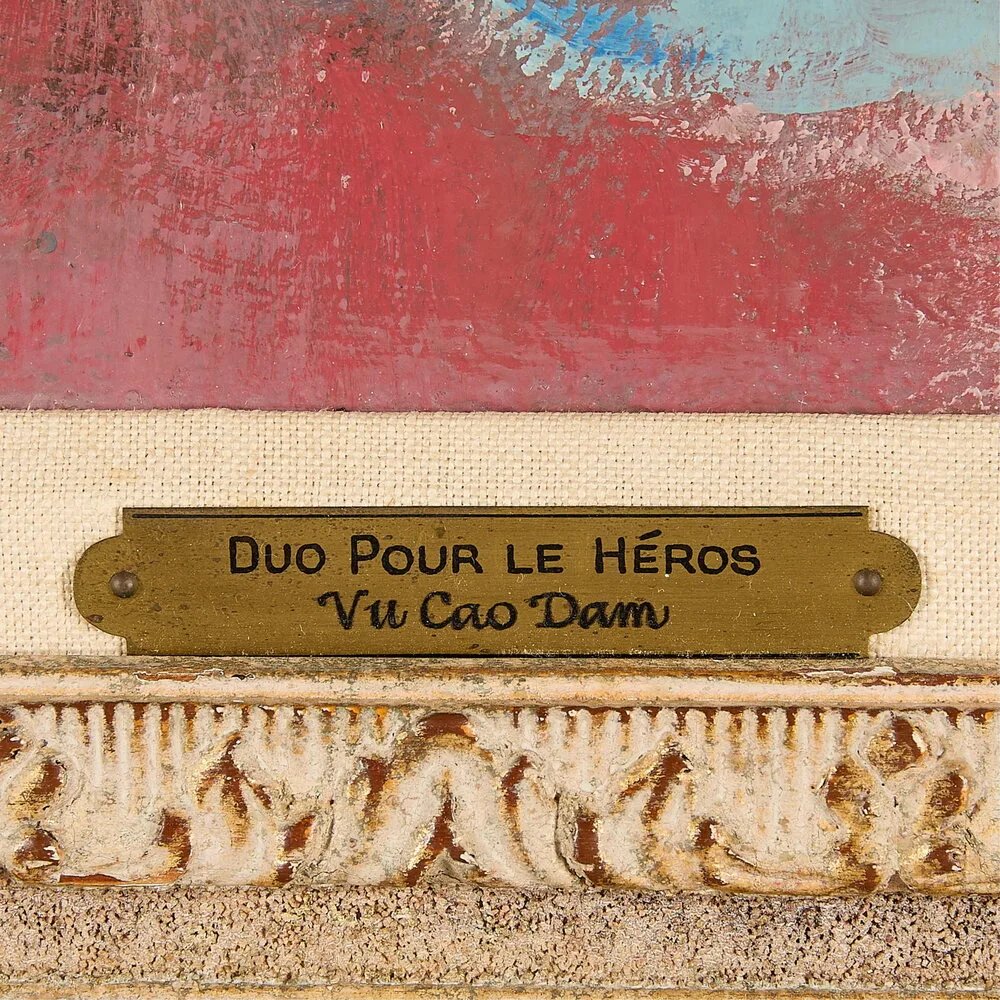
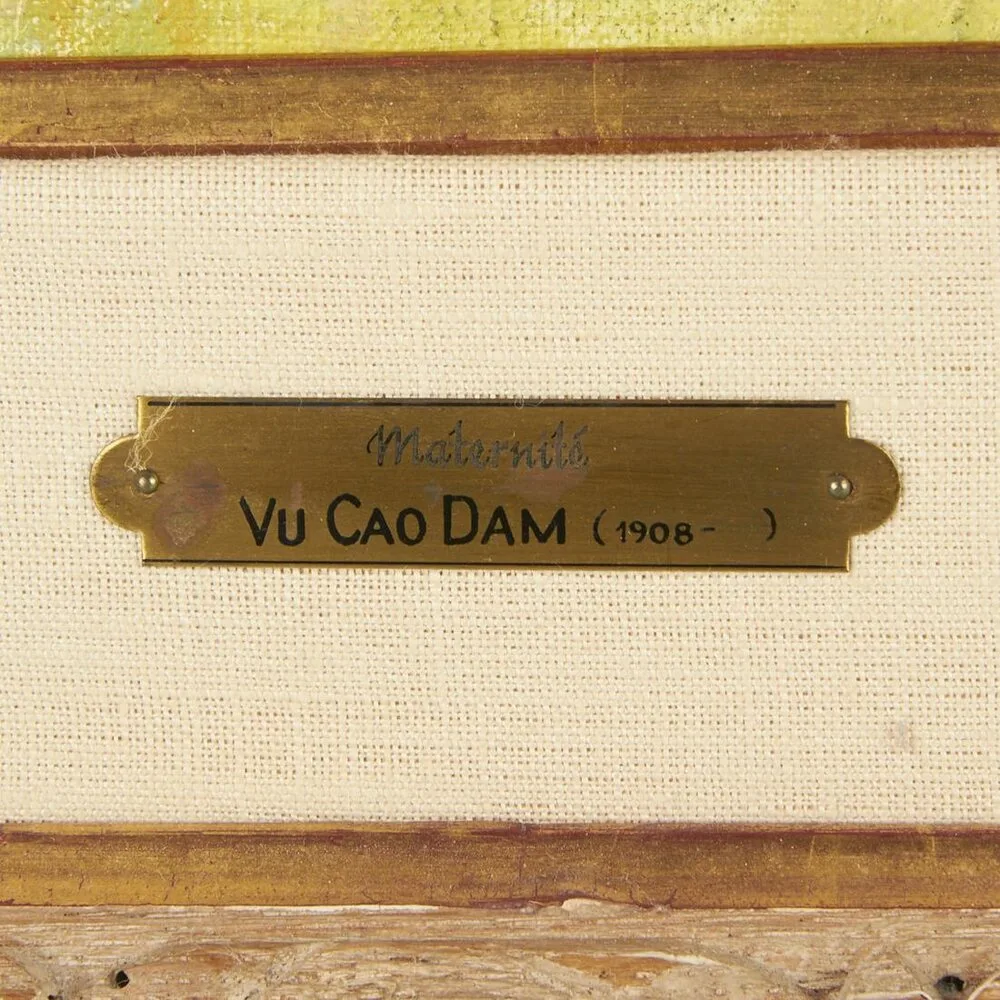
Keep everything on the back of a painting. Works sold through the Wally Findlay Gallery can carry stock inscriptions on the reverse, and the gallery issued certificates in his lifetime. Some canvases survive in the artist's original frame. The paintings Revere has handled have a small brass plate with the name and sometimes the title.
Who authenticates his work
No catalogue raisonné of Vu Cao Dam has been published. A catalogue has been reported as forthcoming from his daughter, and researchers in France and the United States have each described catalogues of their own. No single committee or authority is recognized by all sides.
A certificate is one piece of evidence alongside the signature, the materials and the history of the work.
Fakes
Forgeries are a known problem. In 2016 the researcher Ngô Kim Khôi denounced a silk offered in Paris as a copy of a genuine painting that had been shown at the Musée Cernuschi, pointing to its signature and stamp and to its smaller size. The researcher Phạm Long has linked rising forgery to rising prices. Size, signature, materials and provenance should all be checked together.
Questions
How did Vu Cao Dam sign his paintings?
On his oils he usually signed vu cao dam in a flowing lowercase script, low in a corner, often with a two-digit year. The back is often signed again in Chinese, with the title and date. Silks can be signed in Chinese and in roman letters, with a seal.
Was Vu Cao Dam a sculptor?
Yes. He trained as a sculptor in Hanoi and made bronzes in Paris through the 1930s, including busts of Colette and Paul Reynaud, now in the Musée Cernuschi. In 1946 he modelled a portrait bust of Ho Chi Minh. He turned to painting on silk around 1935 and returned to sculpture in 1985.
Is there a Vu Cao Dam catalogue raisonné?
No catalogue raisonné has been published. Several parties have described catalogues in preparation, and no single authority is recognized by all sides.
Are there fake Vu Cao Dam paintings?
Yes. Researchers have publicly challenged works attributed to him. Size, signature, materials and provenance should all be checked, and a specialist should see the front, the back and every label.